How to Salt Food So It Tastes Like Itself
Salt is less about making food salty and more about bringing out what's already there. Learn when and how to add it, and how to rescue a dish that's gone too far.
You followed the recipe, the timer went off, and the first bite was flat. Nothing was wrong exactly, but it didn't taste like much. Most of the time the fix is simpler than a new recipe: it's how and when you used salt.
Why recipes say "to taste"
It can feel like a dodge when a recipe ends with "salt to taste." It's actually honest. Recipes can't know how salty your broth is, how big your tomatoes are, or how much liquid cooked off in your pan.
Salt also isn't all the same. Fine table salt packs tightly, while coarse flaky salt takes up more space for the same weight. A spoonful of one isn't a spoonful of the other. If your salt differs from the one the recipe writer used, the written amount can land far off.
Salt doesn't just make food salty. In the right amount, it rounds out flavors, softens bitterness, and makes the savory, sweet, and fatty notes in a dish easier to notice. That's why under-salted food tastes dull instead of simply "not salty."
Salting in layers as you cook
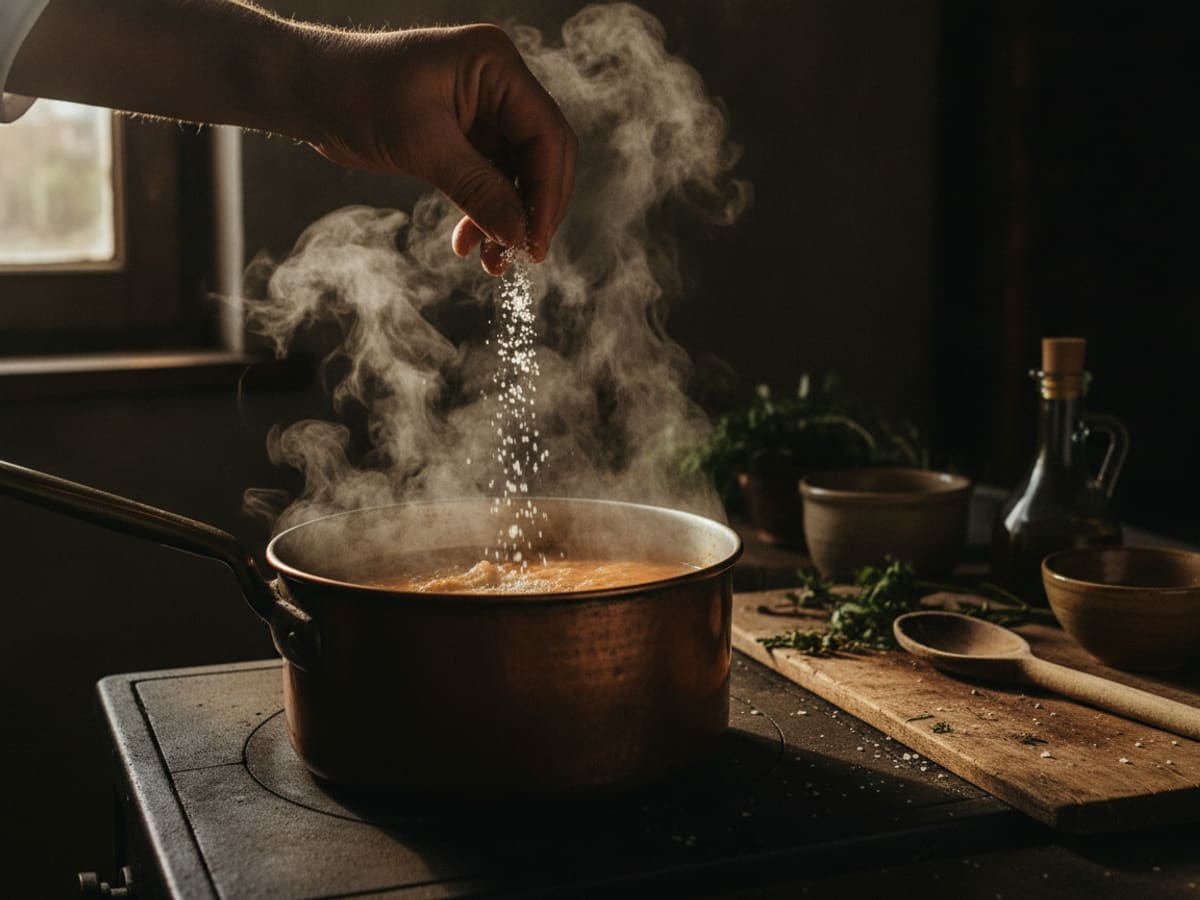
The most useful habit is to season a little at each stage instead of all at once at the end. Salt added early has time to dissolve and blend into the food. Salt dumped on at the finish often sits on top and tastes sharp.
Here's a simple rhythm for a soup, stew, or sauce:
- Add a small pinch to the onions or other aromatics as they soften. It helps them release moisture and cook evenly.
- Add another small pinch when the main ingredients go in.
- Taste after the liquid has simmered for a while, since flavors concentrate as it reduces.
- Make a final adjustment right before serving, a little at a time.
Always taste with a clean spoon, and let the food cool for a moment first. Very hot food dulls your sense of taste, and you may add more salt than it needs.
Salting pasta water, vegetables and meat
Pasta, potatoes, rice, and dried beans soak up water as they cook, and that's your one chance to season them from the inside. Pasta cooked in plain water often tastes bland no matter how good the sauce is. Salt the water once it boils, enough that it tastes pleasantly seasoned, like a light broth. Most of that water goes down the drain, so the pasta takes up only a portion of the salt.
For vegetables, salt helps with browning and flavor. Toss them with a little salt and oil before roasting. For watery vegetables like zucchini or eggplant, salting ahead and blotting off the moisture can help them brown instead of steam. Green vegetables blanched in well-salted water usually taste fresher and more lively.
Meat benefits from salting ahead of time. Salt the surface of chicken, pork, or steak well before cooking, even 30 minutes ahead and longer for thicker cuts. The salt pulls moisture out, then the meat reabsorbs it along with the seasoning. If you only have a few minutes, salt right before the pan instead. Salting a little ahead of the heat and then sitting it in a puddle of juices is the worst of both worlds.
Ground meat is a good example of a place to mix salt in thoroughly, because seasoning only the outside of a meatball or burger leaves the center plain.
Using acid and herbs when salt isn't the answer
Sometimes you've added salt and the dish still seems muted. That usually means it needs brightness, not more salt. Try a small squeeze of lemon or lime, a splash of vinegar, or a spoonful of something tangy like yogurt. Acid wakes up flavors the way salt does, but in a different way.
Other things to try:
- Fresh herbs stirred in at the end, since long cooking dulls their flavor.
- A little fat, such as butter or olive oil, to round out a thin-tasting sauce.
- Toasted spices or a bit of garlic, ginger, or zest for depth.
- A pinch of sugar when tomatoes or vinegar taste sharp.
- Black pepper or a little heat for a lift.
A quick test: if the dish tastes flat, add acid. If it tastes hollow or watery, add salt. If it tastes busy but not savory, a little more salt may pull it together.
Fixing an over-salted dish
It happens to everyone. You can't remove salt, but you can spread it out or balance it.
- Add more of the unsalted ingredients: extra vegetables, beans, rice, pasta, or unsalted stock or water to dilute.
- Stir in acid, like lemon juice or vinegar, which can make the saltiness feel less prominent.
- Add richness with a splash of cream, a spoonful of yogurt, or a bit of unsalted butter or oil.
- Serve it with plain starch, like bread, rice, or potatoes, to mellow each bite.
- Make a double batch of the dish without salt and combine the two.
The old trick of dropping in a raw potato to "soak up" salt doesn't work well. The potato absorbs liquid, but the saltiness stays in the pot.
Salt and your doctor's advice
Many people are told to watch their sodium for health reasons. If that's you, seasoning well doesn't have to mean using a lot of salt. Acid, herbs, spices, aromatics, and good browning can do much of the work, and tasting as you go helps you use only what the dish needs. Remember too that packaged sauces, broths, canned goods, and cured meats often already